Cloera: Where Architectural Precision Meets Modern Design
Finding a typeface that feels both innovative and timeless is a common challenge for designers and brand builders. We often search for a font that carries personality without overwhelming the message, one that can anchor a brand identity with quiet strength. Enter Cloera, a modern display typeface that achieves this delicate balance. It’s not just a set of letters; it’s a design asset built on the principle of structured elegance, making it a standout choice for projects that demand sophistication and a forward-thinking edge.
The Anatomy of a Distinctive Typeface
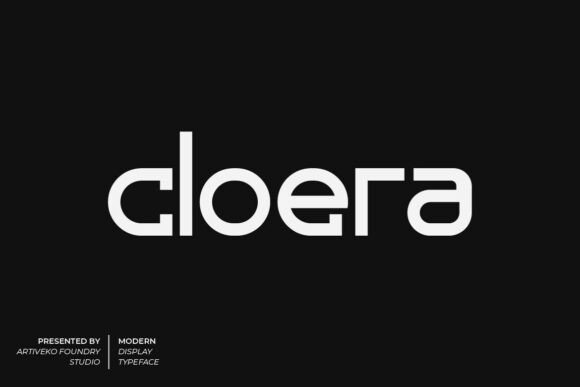
What sets Cloera apart in a crowded field of creative fonts? Its design is a study in contrasts. The foundation is one of structured precision—each glyph is crafted with a clear, wide-set footprint that conveys stability and professionalism. Yet, this structure is softened by gentle, flowing curves that give the font a human touch. The most defining feature is its series of unique, semi-circular cutouts within the letterforms. These negative spaces are not mere decorations; they are integral to the font's character, introducing a subtle futuristic personality and ensuring each character is instantly recognizable.
This combination results in a typeface that feels both geometric and organic. It’s a premium font that doesn't shout for attention but commands it through its architectural beauty and thoughtful details. The overall appeal is one of quiet confidence, making it exceptionally suited for brands that want to project innovation, quality, and a refined aesthetic.
Strategic Applications for Maximum Impact
Understanding a font's strengths is key to using it effectively. Cloera thrives in roles where its unique personality can shine without competing with other visual elements. It is, first and foremost, a display font. This means its ideal applications are in large-scale, high-impact settings.
Consider these practical uses:
- Luxury Branding & Logo Design: The font’s inherent elegance makes it perfect for creating powerful logo marks for high-end brands. Think of a skincare line, a modern furniture studio, or an exclusive boutique hotel. Cloera provides that instant air of premium quality and discerning taste.
- Editorial & Packaging Design: Use it for bold headlines on magazine covers, book jackets, or product packaging. Its strong visual hierarchy ensures the title grabs attention, while its sophistication maintains a high-end feel. It pairs beautifully with minimalist packaging, letting the typography become the central design feature.
- Digital Presence & Social Media Graphics: In the fast-scrolling world of social media, a distinctive header font is invaluable. Cloera can make a website hero section or a series of Instagram graphics feel cohesive and professional, strengthening brand recognition across platforms.
For body text or long-form reading, however, Cloera is not the right choice. Its strength lies in headlines and logos. The very features that make it distinctive at a large size can reduce readability in small blocks of text. The key is to use it as the star of the show, supported by a complementary cast.
Building a Cohesive Visual Language
A single font rarely works in isolation. The true power of a typeface like Cloera is unlocked through thoughtful font pairing. Its structured, wide-set nature calls for a partner that is clean and unobtrusive. A light-weight sans-serif font is the classic and effective choice. Fonts like Helvetica Neue Light, Proxima Nova, or Montserrat provide a clean, modern counterpoint that ensures readability in paragraphs and subheadings without competing for attention.
This pairing strategy is fundamental to modern typography and achieving a balanced brand identity. Cloera acts as the confident, attention-grabbing headline, while the sans-serif delivers the supporting information clearly and accessibly. This contrast creates a clear visual hierarchy, guiding the viewer’s eye from the impactful headline to the detailed content beneath.
Furthermore, Cloera’s personality shines brightest in a monochromatic color palette. Think deep charcoal on a crisp white background, or a soft cream paired with a muted navy. This restrained approach allows the font’s intricate details and unique cutouts to take center stage, emphasizing its architectural quality over flashy color. It’s a strategy that reinforces a sense of timelessness and sophistication.
A Practical Guide to Selecting and Using Cloera
Before integrating any new design asset into your workflow, a practical evaluation is essential. Here’s how to approach the Cloera typeface for your project:
- Evaluate the Project Fit: Ask yourself: does my project’s personality align with Cloera’s? It’s ideal for brands aiming for a modern, luxurious, or architecturally inspired aesthetic. It might be less suitable for playful, casual, or highly traditional themes where a script font or classic serif font would be more appropriate.
- Test Thoroughly: Always test the font in context. See how it looks in your specific color scheme and at the sizes you plan to use. Check the rendering on different screens if your project is digital, or in print proofs if it’s for physical materials. Pay attention to how the semi-circular details hold up.
- Review the Font Family: Check what styles are included with your license. Does it come with bold, italic, or condensed variations? Having multiple weights can greatly expand its utility within your web design or print layouts, allowing for more nuanced hierarchy.
- Understand the Licensing: Cloera is a commercial font. This means you must purchase the appropriate license for your intended use—whether for a single client, a number of computers, or for embedding in an app or website. Always read the End User License Agreement (EULA) to ensure compliance, which is a mark of professionalism for any designer or business owner.
By treating Cloera not just as a font but as a core component of your modern typography