Flower Forest: Crafting a Whimsical Brand Identity
A Typeface That Blooms with Character
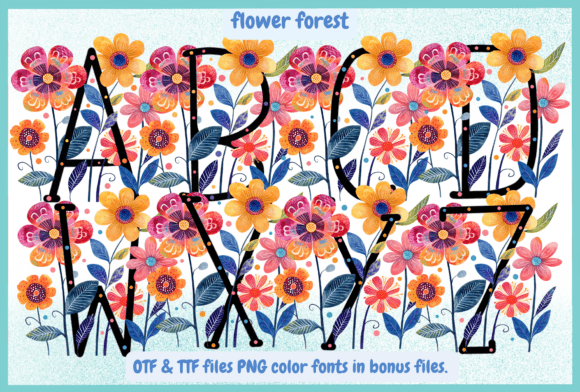
When you encounter the Flower Forest typeface, the first thing you notice isn't just the letters—it's the atmosphere. This premium font is a celebration of nature, where every character is meticulously crafted with hand-painted botanicals. It doesn't just spell out words; it weaves a garden across your canvas. Unlike standard sans serif font options that prioritize stark minimalism, or rigid serif font families that demand formality, Flower Forest offers a tactile, organic warmth. It is a true display font, designed to command attention in headlines, logos, and hero images rather than body copy. The visual style is unapologetically joyful, featuring a rich palette of greens and floral hues that mimic the unpredictability of a real meadow.
For the creative professional, this isn't just another script font or handwritten font. It is a comprehensive design asset that brings a specific emotional resonance to a project. The "personality" of the font is playful yet sophisticated, making it a versatile tool for projects that need to feel approachable but high-end. Whether you are designing a wedding invitation or a product label for artisanal honey, the aesthetic appeal of Flower Forest lies in its ability to evoke the freshness of spring. It taps into a desire for nature-inspired aesthetics that feels refreshing in an era dominated by flat, digital-first modern typography.
Strategic Applications in Branding and Marketing
Understanding where to deploy a creative font like Flower Forest is key to successful brand identity. Because of its intricate detailing, it excels in environments where it can breathe without competing against dense text.
- Packaging Design: This is perhaps the strongest use case. If you are in the business of organic skincare, tea, chocolates, or floristry, Flower Forest instantly communicates "natural" and "handcrafted" without a single word of copy. It sets the tone on a shelf crowded with sterile, industrial designs.
- Editorial Design and Publishing: For editorial design, specifically children’s book covers or lifestyle magazine headers, the font provides a whimsical entry point. It captures the imagination immediately, signaling a story that is fun and lighthearted.
- Digital Presence: In the realm of web design, restraint is required. Use it for hero section headers or specific call-to-action graphics. It also shines in social media graphics, where stopping the scroll is the primary objective. A sale announcement or a seasonal campaign using this typeface feels distinct and memorable.
However, context matters. You wouldn't use a dense botanical display font for a law firm’s logo design or a tech startup’s dashboard. Flower Forest targets a specific niche: businesses and creators who want to project joy, nature, and creativity. It works beautifully for entrepreneurs who build their personal brand around lifestyle, wellness, or art.
Technical Considerations and Readability
While the artistic value of Flower Forest is high, a professional designer must consider the technical constraints of a display font. The primary rule of modern typography is hierarchy. Because this font features intricate foliage and petal details woven into the letterforms, legibility decreases significantly at small sizes. This is not a flaw; it is a characteristic of the style.
Therefore, you should avoid using Flower Forest for paragraphs or fine print. The visual noise of the flowers will blur together, causing eye strain for the reader. Instead, treat it as an artistic header. For your body copy, you need a strong font pairing. The contrast is what creates visual interest.
- Pair with a Clean Sans Serif: A geometric or humanist sans serif font (like Montserrat or Lato) provides a clean, neutral backdrop that lets the floral details of Flower Forest pop without overwhelming the viewer.
- Pair with a Simple Serif: If you want a more classic, editorial look, a transitional serif font can ground the whimsy of the botanical letters, adding a touch of traditional elegance.
Always test your font pairing in context. A header in Flower Forest might look stunning in a mockup, but on a mobile screen, you may need to increase the tracking (letter spacing) slightly to ensure the leaves of one letter don't physically touch the petals of the next, which can hinder recognition.
Evaluating the Asset and Licensing
Before integrating Flower Forest into a commercial project, it is vital to review the technical specs and licensing. As a premium font, it usually comes with a specific set of files optimized for different environments.
Check if the typeface includes alternate characters or ligatures. Many high-quality botanical fonts include swashes—decorative tails on letters—that can add extra flair to the beginning or end of a word. Experimenting with these OpenType features can elevate a standard design into something bespoke.
Furthermore, scrutinize the licensing. If you are a small business owner creating a logo, you generally need a license that covers commercial use. If you are a print-on-demand seller planning to put this design on t-shirts or mugs, you need to ensure the license permits "embedding" in physical products. Ignoring this can lead to legal headaches down the road. Flower Forest is an investment in your visual assets; treating it with professional due diligence ensures your brand remains secure.
Conclusion: The Power of Joyful Design
In a digital landscape that often feels cold and algorithmic, choosing a typeface like Flower Forest is a deliberate act of humanization. It reminds your audience that there is a person behind the brand—someone who appreciates beauty, nature, and craftsmanship. By using this font strategically for headlines, logos, and key visual touchpoints, you create an emotional bridge to your audience. It is more than just a collection of vectors; it is a tool for storytelling. When used correctly, respecting its style and technical limits, Flower Forest doesn't just display text; it cultivates an experience.