Kinder Delight: The Font That Feels Like a Warm Hug
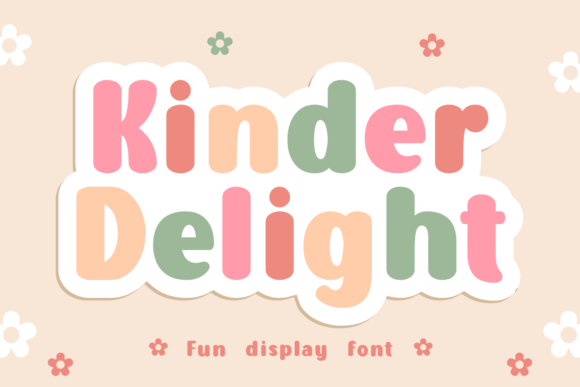
When you’re building a brand or designing a piece of creative work, the typeface you choose does more than just display words—it sets a tone. Kinder Delight is a prime example of a premium font designed to do exactly that. It’s not just a collection of letters; it’s a personality waiting to be applied to your project. As a display font, its primary job is to catch the eye and evoke a specific feeling immediately. With its soft, rounded geometry and charmingly imperfect edges, Kinder Delight communicates warmth, safety, and joy without needing a single extra design element.
Unlike the rigid structure of a standard sans serif font or the formality of a serif font, this typeface lives in the space of approachability. The letters seem to bounce slightly on the baseline, giving text a rhythmic, happy cadence. It avoids the scratchiness that can sometimes plague handwritten fonts or script fonts, opting instead for a clarity that ensures the message gets across even when the style is playful. For designers, this balance is gold. It allows you to inject personality into a layout without sacrificing the fundamental need for the audience to actually read what you’ve written.
Visual Characteristics and Personality
Looking closely at the anatomy of Kinder Delight, you’ll notice the deliberate softening of terminals and the generous x-height. The "b" and "d" have a softness that feels organic, almost like dough, while the counters (the enclosed spaces in letters like 'o' and 'e') are open and inviting. This isn't just about aesthetics; it’s about psychology. Rounded shapes in modern typography are subconsciously associated with friendliness and safety. This makes Kinder Delight a powerful tool for brand identity, particularly for brands that want to position themselves as customer-centric and gentle.
The color palette often associated with this font in promotional materials—soft pastels like mint, peach, and lavender—highlights its versatility. It pairs beautifully with soft gradients and organic textures. However, its true strength lies in its ability to stand out against high-contrast backgrounds. Imagine a crisp white card stock with a deep charcoal Kinder Delight header; suddenly, the font feels sophisticated yet retaining its inherent playfulness. It bridges the gap between creative font utility and professional web design requirements.
Strategic Applications: From Packaging to Pixels
One of the most common mistakes in design is using a display font where a body font is needed. Kinder Delight is strictly a headline hero. It is designed for impact, not for long-form reading. Here is where it truly shines across different mediums:
- Logo Design and Branding: If you are launching a boutique bakery, a children’s clothing line, or a wellness app, this typeface offers a ready-made personality. It suggests that your brand is approachable and trustworthy.
- Packaging Design: On a shelf, consumers make split-second decisions. The bubbly nature of Kinder Delight draws the eye, particularly in the food, beauty, or toy sectors. It feels tactile, as if you could reach out and touch the soft curves of the letters.
- Editorial Design and Publishing: For magazine headers, chapter titles in a book, or newsletter banners, it provides a necessary break from serious body copy. It tells the reader, "This section is fun."
- Digital and Social Media: In the fast-scrolling world of Instagram or TikTok, social media graphics need to stop the thumb. Kinder Delight creates an immediate emotional connection, making it perfect for quotes, announcements, and call-to-action overlays.
Mastering Font Pairing and Hierarchy
Using a strong display font like Kinder Delight requires a thoughtful counterpart. Because it has such a distinct personality, pairing it with another expressive font (like a heavy script font) can result in visual chaos. The rule of contrast applies here: pair the loud with the quiet.
An excellent pairing strategy for Kinder Delight involves using a clean, geometric sans serif font for your body text. Fonts with neutral personalities allow Kinder Delight to take the stage for headlines without competing for attention. For example, using a light-weight sans serif for descriptions allows the weight and roundness of Kinder Delight to anchor the design. This establishes a clear visual hierarchy, guiding the viewer’s eye from the engaging headline to the informative body copy seamlessly.
Practical Considerations for Professionals
Before integrating any design asset into a professional workflow, a few technical checks are necessary. First, consider the context of readability. While Kinder Delight is legible at medium to large sizes, testing it at the intended size is crucial. For mobile web design, ensure that the kerning (spacing between letters) is tight enough to look cohesive but loose enough to prevent the letters from clashing, particularly with tricky letter combinations like "ol" or "va".
Second, review the licensing. If you are a freelancer or a small business owner, ensure the font license covers your specific end-use. Most commercial fonts require an extended license if they are being embedded in apps or distributed in digital products. Always verify that the Kinder Delight license covers logo design to avoid legal issues down the road.
Finally, explore the full family. Does the font come with multiple weights? Does it include multilingual support? These features determine the longevity of the font within your design system. A versatile typeface can adapt to seasonal campaigns—perhaps a bolder weight for summer sales and a regular weight for everyday updates. By treating Kinder Delight not just as a decoration but as a strategic tool, you can elevate your projects from simply "cute" to professionally compelling.