Whisper: The Gentle Typeface for Personal Design
Finding the right typeface for a project is less about following rigid rules and more about capturing a specific mood. When a project calls for something soft, approachable, and distinctly human, the search often leads to display fonts that mimic the organic imperfections of handwriting. Among the many creative fonts available today, the Whisper typeface stands out for its ability to bring a quiet, handcrafted elegance to visual communication. It doesn't shout for attention; rather, it draws the viewer in with a comforting, familiar warmth.
The Anatomy of a Soft Touch
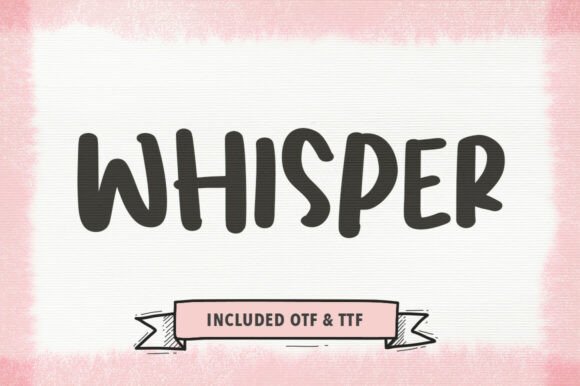
At its core, the Whisper font is a study in softness. Its visual personality is defined by thick, rounded letterforms that feel substantial yet airy. Unlike the rigid geometry of a modern sans serif font or the sharp serifs of traditional editorial design choices, Whisper features a slight organic bounce in its baseline. This subtle movement mimics the natural flow of a handwritten note, making the text feel personal and immediate. The strokes are consistent and friendly, avoiding the chaotic loops of a standard script font while retaining that cozy, bespoke feel.
This design approach makes Whisper a premium font asset for creators who want to avoid the coldness often associated with digital text. In the realm of modern typography, there is a growing demand for typefaces that bridge the gap between professionalism and personality. Whisper achieves this balance effortlessly. It feels curated and intentional, suggesting that a human hand was involved in the creation of the message, which is a powerful psychological trigger in branding and marketing.
Practical Applications: From Nursery Walls to Boutique Branding
Understanding where Whisper works best requires looking at its inherent character. Because of its friendly weight and gentle curves, it excels in environments where comfort and trust are paramount. It is an exceptional choice for nursery wall art, where the soft letterforms complement pastel color palettes and whimsical illustrations. The font feels as light and comforting as a soft breath of air, ensuring that the visual environment remains soothing rather than stimulating.
Beyond home decor, the Whisper typeface is a natural fit for the small business and entrepreneurial space. Imagine a local bakery, a handmade candle shop, or a boutique clothing brand. These businesses thrive on personal connection and authenticity. Using Whisper for logo design or packaging design instantly communicates that the brand values a personal touch. It tells the customer that there are real people behind the product who care about the details. When applied to greeting cards or invitation suites, the font elevates the stationery, making every message feel like a heartfelt gesture rather than a mass-produced print.
Strategic Pairing and Visual Hierarchy
While Whisper is a versatile display font, it is most effective when used strategically. As a creative font with a strong personality, it is rarely the best choice for long-form body copy, such as a 10-page report or a dense blog post. Its strength lies in headlines, subheadings, pull quotes, and call-to-action buttons. In these roles, it establishes the visual hierarchy by drawing the eye to the most important information first.
To maximize its impact, consider your font pairing choices carefully. A common mistake in design is pairing two highly decorative fonts, which creates visual clutter. Instead, contrast the rounded, organic nature of Whisper with a clean, neutral sans serif font for the supporting text. This contrast allows the headline to pop while ensuring the body copy remains highly legible. For a more editorial design approach, Whisper can also be paired with a light serif font to create a look that feels both classic and contemporary. Testing these pairings on a mockup is essential to ensure the weights balance each other out.
Digital Presence and Social Media Graphics
In the fast-paced world of web design and social media graphics, stopping the scroll is a priority. Whisper offers a solution that is both eye-catching and gentle. On a website, it can be used for hero section headers to immediately set a welcoming tone. Its thick, rounded shapes ensure that it remains legible even at smaller sizes on mobile devices, though care should always be taken to test readability across different screen resolutions.
For content creators and marketers, Whisper is a valuable addition to a library of design assets. On platforms like Instagram or Pinterest, where visual aesthetics drive engagement, this typeface can help build a cohesive brand identity. It works beautifully overlaid on photography, especially lifestyle images with soft lighting. Because it does not have sharp, jagged edges, it blends seamlessly into images without creating visual noise. This makes it an ideal choice for quotes, announcements, and promotional graphics that need to feel inviting.
Evaluating Fit and Commercial Licensing
Before integrating any new typeface into your workflow, a practical evaluation is necessary. First, consider the specific message of your project. If your brand identity relies on being edgy, industrial, or hyper-corporate, Whisper might feel out of place. However, if your goal is to appear approachable, artisanal, or nurturing, it is likely a perfect match.
Next, look at the technical aspects of the font package. A high-quality premium font often includes various styles and weights, such as bold or italic variations, which are crucial for creating dynamic layouts. Check the character map to ensure it includes the punctuation and special characters you need for your specific language or project requirements.
Finally, always review the licensing terms. For designers working with clients, or small business owners using the font on merchandise, a commercial license is typically required. Understanding the difference between a desktop license (for printed materials and logos) and a web font license (for website usage) is vital to ensure you are using the asset legally. Investing in a properly licensed font not only protects you legally but also supports the type designers who create these tools.
Conclusion: The Power of Quiet Design
In a landscape often dominated by loud, aggressive marketing, the Whisper typeface offers a refreshing alternative. It proves that modern typography doesn't always have to be bold and brash to be effective. By choosing a font that embodies softness and handcrafted elegance, designers and entrepreneurs can create brand touchpoints that resonate on an emotional level. Whether used for a delicate greeting card, a sophisticated logo, or a calming nursery print, Whisper brings a quiet confidence to any creative project.