Abakura: Capturing the Raw Energy of Urban Typography
When you’re staring at a blank canvas, trying to inject some genuine attitude into your design, standard corporate fonts often fall flat. You need something with grit, history, and motion. This is where Abakura enters the conversation. It isn’t just a typeface; it is a digital artifact that mimics the visceral impact of a flat brush hitting a rough concrete wall. For designers and brand builders looking to break away from the polished, sterile look of modern minimalism, Abakura offers a bridge to the spontaneous spirit of street art and aggressive action sports.
The Anatomy of Abakura: More Than Just Messy Letters
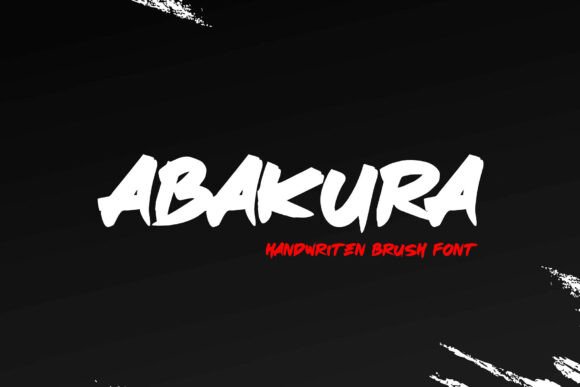
At first glance, you might categorize Abakura simply as a handwritten font, but that description doesn’t quite capture its technical nuances. It is a display font engineered for high-impact messaging. The visual characteristics are defined by aggressive, textured strokes that vary in weight, mimicking the pressure changes of a human hand wielding a marker. The terminals are sharp and jagged, cutting off with a sense of urgency rather than fading out politely.
The slant of the letters is intentional. It creates a forward momentum, suggesting movement and speed. Unlike a traditional script font, which often prioritizes legibility and flow for long sentences, Abakura prioritizes volume and presence. It is designed to scream, not whisper. The texture within the strokes isn’t just noise; it’s a carefully crafted roughness that prevents the letters from looking like flat vectors. When you zoom in, you see the "ink bleed" effect, a hallmark of high-quality modern typography that seeks to replicate analog tools. This attention to detail ensures that when you use Abakura, you are bringing a layer of authenticity that digital-native fonts like sans serif font families simply cannot replicate.
Strategic Applications: Where Abakura Fits Best
Understanding a font's personality is one thing; knowing where to deploy it is the real challenge. Abakura excels in environments where the design needs to feel "loud" and energetic. If you are working on logo design for a gym, a CrossFit box, or a skate brand, this typeface sets the tone immediately. It communicates strength, rebellion, and raw capability without needing a single icon to support it.
Beyond fitness, consider the world of entertainment and apparel. For music festival posters or album covers, Abakura captures the chaotic energy of live performance. It translates incredibly well to streetwear labels, where the aesthetic is often built on a foundation of DIY culture and urban grit. In packaging design, particularly for energy drinks, craft beers, or hot sauces, the font’s aggressive stance suggests a bold flavor profile.
However, context is king. While Abakura dominates social media graphics and web design headers, it is not a serif font meant for body copy. Using it for a paragraph of text would be a usability mistake; the eye fatigue would be instant. Instead, treat it as the hook. Use it for the headline that grabs the user by the collar, and then let a cleaner typeface handle the details. This approach is vital for editorial design and publishing, where you need a punchy title to sell the story, but a readable font to tell it.
Mastering the Pairing: Contrast is Your Friend
One of the most common questions regarding aggressive display fonts is how to balance them. Abakura has a heavy visual weight; it demands attention and fills the frame. If you pair it with another decorative font, the result is visual chaos. To ground Abakura’s wild energy, you need technical contrast.
The best strategy is to pair this creative font with a clean, monospaced secondary typeface. A monospaced font—where every letter takes up the same amount of horizontal space—offers a mechanical, structured feel that contrasts beautifully with Abakura’s organic, human messiness. This juxtaposition creates a sophisticated font pairing that feels intentional. The monospaced font acts as the voice of reason, while Abakura acts as the voice of passion.
Color application also plays a massive role in how Abakura is perceived. Because of its heavy texture and rough edges, it shines brightest when used with high-contrast color palettes. Think white-on-black or neon-on-dark. When you place Abakura on a white background, the texture can sometimes get lost or look slightly washed out. But on a dark background, the negative space between the "ink" strokes creates a glowing, vibrant effect that enhances the "urban art" vibe. This is a crucial consideration for web design and digital interfaces where screen glare and resolution can affect how textures render.
Practical Considerations for Professional Use
While the aesthetic appeal is strong, professionalism requires due diligence. Before you finalize a project using Abakura, you need to evaluate the technical aspects of the premium font. First, check the licensing. Since Abakura is a commercial font, ensure your license covers the specific application—whether it’s for a client’s brand identity, a run of t-shirts, or a digital-only campaign. Licensing is the safety net of professional design assets.
Next, review the included styles. Does the typeface come with alternates or ligatures? High-quality handwritten fonts often include different versions of key letters (like 'a', 'g', or 's') to prevent repetition, which breaks the illusion of natural handwriting. If the font supports multiple languages or special characters, verify that these match the technical requirements of your client's market.
Finally, always test for readability at the size it will be used. A font might look great in a mockup on your 27-inch monitor, but how does it look as a thumbnail on a mobile phone? For logo design, the mark must be legible even when scaled down to the size of a favicon. Abakura’s sharp terminals might merge at very small sizes, so testing is non-negotiable. By treating Abakura not just as a stylistic choice but as a functional tool, you can leverage its raw power to create designs that don't just look cool, but actually perform in the marketplace.