Unleashing Playful Design with the Puzzle Game Font
There is a specific moment in the design process where you realize that standard typography just isn't going to cut it. You have an energetic brand, a children's book, or a gaming interface, and the standard sans serif font feels too sterile, while a traditional serif font feels too dated. Enter "Puzzle Game," a typeface that doesn't just sit on the page but practically jumps off it. This isn't just another novelty typeface; it is a carefully crafted display font designed to inject a sense of youth, vibrancy, and kinetic energy into any project. For designers, marketers, and content creators looking for a way to break the mold, understanding the nuances of this font is the first step toward creating something truly memorable.
The Anatomy of Fun: Visual Style and Appeal
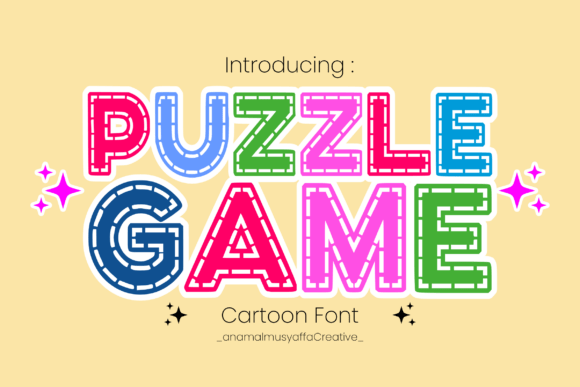
At its core, Puzzle Game is defined by its playful construction. It borrows elements from handwritten fonts and script fonts but retains a structural integrity that makes it far more legible than casual cursive. The visual personality of this typeface is characterized by rounded terminals, slightly irregular baselines, and a bold weight that commands attention. It feels hand-drawn, yet it possesses the consistency required for professional brand identity work.
The appeal lies in its versatility within the "fun" niche. Unlike many modern typography trends that favor minimalism and thin lines, Puzzle Game embraces thickness and color. It is designed to hold ink, whether that ink is digital pixels or physical dye on a t-shirt. For small business owners and entrepreneurs, this means the font works exceptionally well in high-contrast environments. It pops against busy backgrounds and stands out in crowded social media feeds. The "puzzle" aspect suggests connectivity and logic, making it an ideal visual metaphor for strategy games, educational content, and problem-solving apps.
Real-World Applications: From Screen to Print
The true test of any creative font is how it performs in the wild. Puzzle Game is a chameleon in the world of design assets, capable of adapting to various media while maintaining its core character. Here is how different professionals can leverage this premium font:
Digital and Web Design
In the realm of web design, legibility is king, but engagement is the queen that keeps the user there. Puzzle Game is best utilized for hero sections, call-to-action buttons, and navigation headers in the gaming or entertainment industries. It is too stylized for body copy, but as a headline font, it captures the "click-to-play" spirit immediately. For social media graphics, this font is a powerhouse. It cuts through the noise of a scrolling feed, making it perfect for Instagram stories, YouTube thumbnails, and promotional banners that need to convey excitement instantly.
Physical Products and Merchandise
This is where Puzzle Game truly shines. The font’s thick, robust lines are tailor-made for sublimation printing. Whether you are creating designs for coffee mugs, tote bags, or children’s apparel, the bold strokes ensure that the print remains crisp and vibrant even after multiple washes. Crafters and hobbyists using Cricut or Silhouette machines will find that the letterforms cut cleanly without excessive weeding, a common issue with overly intricate script fonts. It brings a level of whimsy to packaging design that suggests the product inside is fun and approachable.
Publishing and Editorial Design
For publishers and bloggers, the font offers a fresh alternative to standard headers. In editorial design, particularly for magazines or blogs focused on parenting, gaming, or lifestyle, Puzzle Game can establish a distinct voice. It pairs surprisingly well with clean, geometric sans-serifs, allowing the header to provide the personality while the body text provides the readability.
Strategic Implementation: Branding and Perception
Choosing a font is a strategic decision that influences how your audience perceives your brand. Typography communicates values before a single word is read. By implementing Puzzle Game, you are signaling that your brand is accessible, creative, and energetic. It moves a brand identity away from the "corporate stiffness" of Helvetica or Times New Roman and toward a more human-centric, approachable vibe.
However, context is everything. While the font is versatile, it is not a one-size-fits-all solution. It would likely feel out of place in a legal document or a luxury watch advertisement. Its strength lies in its ability to lower the barrier to entry. For a startup trying to appear friendly rather than intimidating, or a non-profit trying to appear welcoming, this typeface serves as a visual handshake. It enhances engagement by making the content feel less like a lecture and more like a conversation.
Practical Guide: Pairing and Usage Tips
To get the most out of this commercial font, you need to treat it as a spice rather than the main ingredient. Here are practical recommendations for integrating Puzzle Game into your workflow:
- Font Pairing: Because Puzzle Game is a high-energy display font, it requires a grounding partner. Avoid pairing it with other decorative fonts. Instead, look for a neutral, readable sans serif font like Open Sans, Roboto, or Lato for your body text. This contrast ensures that your hierarchy is clear: the puzzle font grabs attention, and the sans-serif delivers the information.
- Color and Size: This typeface demands color. While it works in black and white, it truly comes alive when applied in bright, saturated hues. Experiment with gradients or textured fills. Ensure you use it at a larger point size; anything below 16pt may cause the playful details to muddy together.
- Spacing and Tracking: Playful fonts often benefit from a little breathing room. Try increasing the tracking (letter-spacing) slightly to prevent the characters from crowding each other, which helps maintain readability in headlines.
Licensing and Final Considerations
Before you download and install, always verify the licensing terms. As a premium font, Puzzle Game likely comes with specific usage rights. Ensure your license covers your intended use, whether that is for a single client project, print-on-demand merchandise, or a massive digital ad campaign. Most commercial fonts distinguish between desktop licenses (for creating static images) and web licenses (for embedding in code).
In conclusion, Puzzle Game is more than just a collection of letters; it is a tool for storytelling. It allows designers to tap into a sense of nostalgia and joy that resonates with audiences of all ages. Whether you are designing a logo for a new mobile game, creating packaging for a toy store, or spicing up a blog layout, this font offers a reliable way to inject personality and charm into your work. It redefines what fun looks like in modern typography, proving that professional design doesn't always have to be serious.